
60 GHz / V-Band Antennas for AR & AI Glasses
Human-centric wireless connectivity for next-generation wearables.
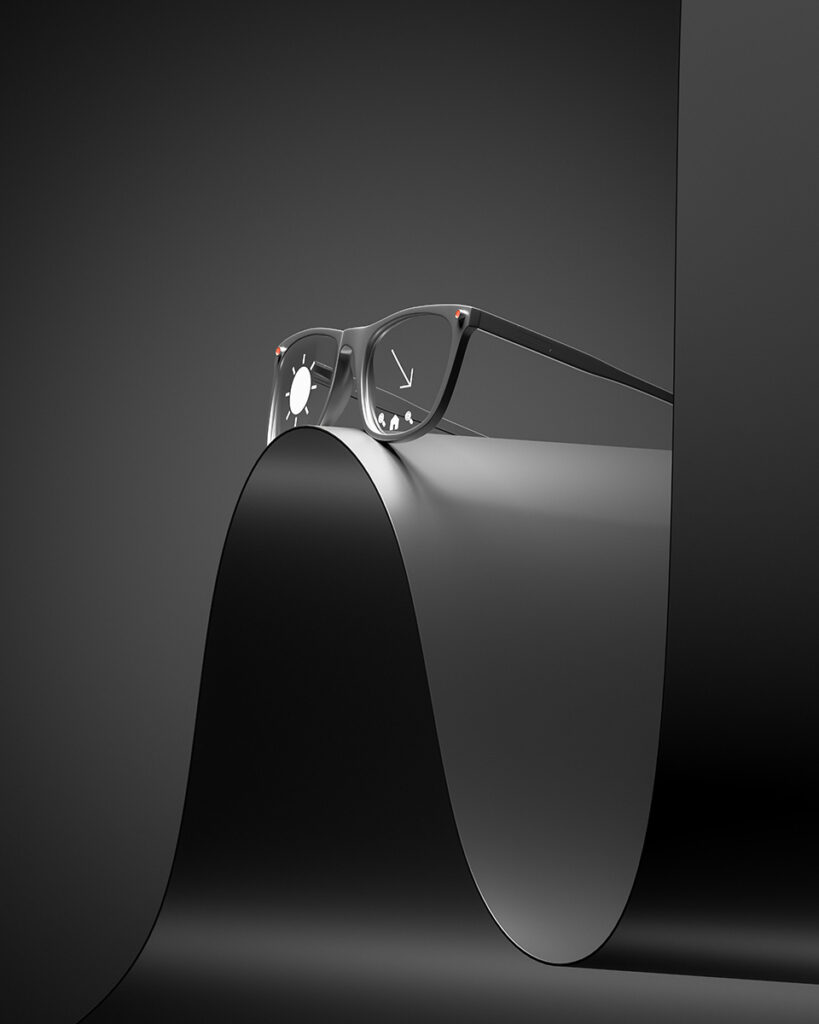
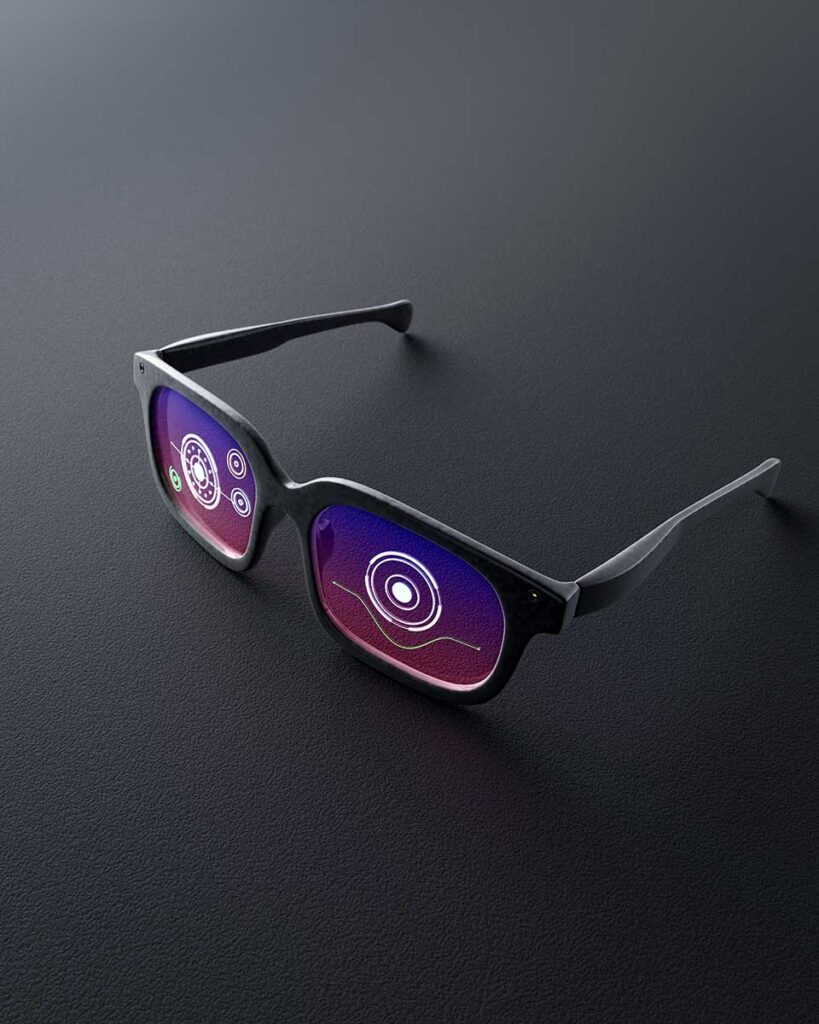
Overview
AR and AI glasses require short-range, ultra-high-bandwidth wireless links to support split-rendering, real-time perception, and AI workloads. At millimeter-wave frequencies, conventional antenna designs face challenges related to head proximity, detuning, occlusion, and industrial-design constraints.
Microtenna develops 60 GHz / V-Band antenna architectures intended for smart glasses, addressing these challenges at the physical-architecture level.
Why 60 GHz
The 60 GHz (V-Band) spectrum enables very high data rates with low latency over short distances, making it suitable for wearable split-rendering architectures, provided the antenna is designed for operation near the human head.
Human-Centric RF Design
The architecture focuses on near-field electromagnetic control rather than free-space assumptions. The design intent includes shaping RF energy away from the user’s head and reducing detuning caused by tissue proximity.
Lens-Edge Integration
The antenna architecture is designed for integration into the lens-edge (V groove) region, enabling invisible placement, optical compatibility, and slim eyewear form factors without external RF windows.
High-Gain Radiation Characteristics
The architecture is intended to support directional radiation suitable for short range, high-throughput wearable links.
Wide V-Band Bandwidth
The design targets wide operational bandwidth across the 60 GHz / V-Band spectrum to support high data-rate wireless architectures.
Engineering Scope
The work targets operation across the 57-71 GHz range, supports spatial diversity configurations, and considers alignment with IEEE 802.11ay-class systems at the design level.
Next Step
Contact us to discuss technical requirements and integration options.